For nonprofits of every mission
Your nonprofit's know-how could fund its mission.
The way your team actually runs programs — the SOPs, playbooks, intake workflows, training materials and hard-won decision patterns — is exactly the operational data AI companies now pay to license. NonprofitCraft helps you understand what yours is worth, protect what's sensitive, and get assessed — without selling your organization or giving up ownership of anything.
The assessment is free and run by micro1. It's a license, not a sale — you keep ownership of your data and your processes. See the referral disclosure below.
The opportunity
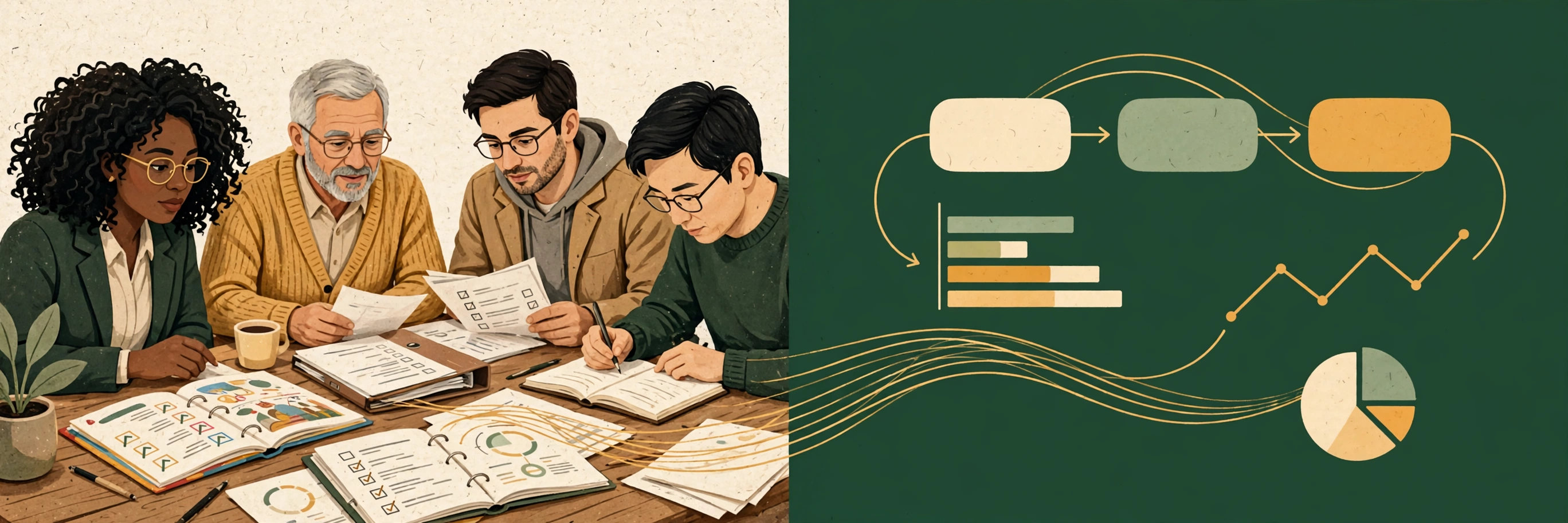
AI is trained on how real work gets done. You do real work.
AI models are good at language and increasingly good at reasoning — but they don't know how a food bank routes a Saturday distribution, how a youth program onboards mentors, or how a housing nonprofit triages intake. That operational knowledge lives in your documents, your systems, and your staff's routines. micro1's data program pays organizations to license that know-how so it can be used to train and evaluate AI systems.

It's knowledge, not personal data
What's valuable is how work is done — procedures, templates, decision trees, quality standards — not who your donors or beneficiaries are. Personal and sensitive records are excluded by design (see Protections).
It uses what you already have
No new program, no new product. The raw material is the documentation and workflow history your organization has built up over years of operations — material that currently earns you nothing.
It's unrestricted revenue
Unlike a grant, licensing income isn't tied to a funder's program restrictions. For many organizations it would be among the largest unrestricted checks they've ever received — if the package qualifies.
What it's worth
micro1's advertised tiers
These are micro1's published ranges for approved data packages — advertised ranges, not a quote or a guarantee for any specific organization. Where a package lands depends on scale, uniqueness, and how well-documented the work is. The free assessment is how you find out.
A focused package: one well-documented operation — a program's full playbook, intake and delivery workflows, training materials and decision patterns — from an organization with a substantial team.
Multiple operations or a larger organization: several programs' workflows, years of operational records, CRM and case-pattern data (de-identified), and the judgment calls embedded in them.
Exceptional scale or rarity: very large teams, deep historical data, or operational knowledge in a domain where few organizations can document how the work is really done.
What moves a package up: more full-time staff generating the work, more years of records, processes that are written down rather than tribal, and work that's hard to learn any other way. What doesn't count: raw lists of people. Names and personal records add risk, not value.
The raw material
What a data package is made of
Whatever your mission — education, food security, housing, youth development, health navigation, the arts, faith-based outreach, social services — the valuable layer is the same: how you run it.
Usually licensable
- SOPs & playbooks — how programs are planned, staffed, run and closed out
- Workflows & decision patterns — intake triage, eligibility calls, scheduling, escalation paths
- Training & onboarding materials — how you teach staff and volunteers to do the work well
- Templates & communications — forms, scripts, letters, curricula, event and trip operations
- Back-office operations — finance, HR, vendor, facilities and CRM processes, with identifiers removed
- De-identified pattern data — volumes, timelines, outcomes in aggregate: what happened, never who it happened to
Never part of a package
- Donor identities and giving histories tied to named individuals
- Beneficiary, client, student or patient records — anything identifying the people you serve
- Health information and anything covered by HIPAA or similar duties
- Confidential conversations — pastoral, counseling, casework and mentoring confidences
- ID documents — passports, licenses, SSNs, background-check files, children's records
- Credentials & access — passwords, keys, bank details, HR disciplinary files
Protections
How sensitive data stays protected
Two layers: what you control before anything leaves, and the commitments to hold micro1 to in writing before you sign.
Built into the process
- De-identification first — material is stripped of personal identifiers before any third party sees it
- You review samples — you see representative extracts of what would be used before use
- Isolated pipelines — your data is handled separately, not pooled with other sources
- Restricted buyers — micro1 states data goes to US and allied-country buyers only
- Agreed deletion — retention and deletion terms are set in the agreement, not left open
Limit your liability — before signing
micro1 doesn't publish its exclusivity, indemnity or liability-cap terms, so these have to be negotiated into your contract. Bring this list to your board and counsel:
- Board approval and a written data-scope exhibit listing exactly what's in — and out
- Ownership stays yours; the license is limited to the agreed use
- Liability cap and mutual indemnity, with micro1 covering downstream misuse
- Exclusivity, term and termination spelled out — including what happens to data if the deal ends
- Audit and deletion rights you can actually exercise
- Independent counsel review — this page is guidance, not legal advice
Is your organization a fit?
micro1 prioritizes organizations with 30 or more full-time employees — that's where the operational depth usually is. Smaller organizations aren't automatically out; the assessment is free and is the only way to know. Answer three questions for a quick read:
You meet the staffing profile micro1 prioritizes and have real documentation to work with. The free assessment will scope what a package could include and at which tier.
Start the free assessment →How it works
From assessment to payment
Free assessment
Register through the link on this page and complete micro1's assessment. It costs nothing and doesn't commit you to anything — it establishes whether your organization and its data are in scope.
Scoping
micro1 reviews your operations and identifies which workflows and materials could form a package, and at which tier. This is where the honest answer on value comes from — not before.
Inventory & redaction plan
Together you list exactly what would be included, what gets de-identified and how, and what stays out entirely. Your never-share list (above) is the starting point.
Contract — with your protections in it
Board approval, counsel review, and the liability, exclusivity, deletion and ownership terms from the checklist above, negotiated before signature. Nothing moves until this is signed.
Delivery & payment
You deliver the agreed package, invoice, and — per micro1's published terms — are paid within 30 days of invoicing. You keep your data, your processes, and full ownership throughout.
Consulting services
Nonprofit & AI consulting
Not every organization is ready to license data — and licensing is only one way to get more from what you know. NonprofitCraft also helps nonprofits strengthen their operations and adopt AI in ways that are safe, practical, and sized for a nonprofit budget and staff.

Nonprofit consulting
For organizations that want their operations to run as well as their mission deserves.
- Operations & systems audit — where time and money leak, and what to fix first
- SOP & playbook building — getting tribal knowledge written down (this is also what makes data licensing possible later)
- Data readiness — inventorying what you hold, cleaning it, and setting a never-share policy before any partnership
- CRM & donor operations — Salesforce and donor-system cleanup, workflows and reporting your board can trust
- Fundraising systems — pipeline, grant tracking and follow-up that don't depend on one person's memory
- Partnership readiness — preparing board, governance and documentation for opportunities like data licensing
AI consulting
For organizations that want AI doing useful work — with guardrails, not hype.
- AI readiness assessment — which workflows are worth automating, which aren't, and what it should cost
- Workflow automation & agents — directed, supervised AI help for intake, scheduling, drafting, reporting and follow-up
- Knowledge bases (RAG) — staff ask questions, answers come from your own documents, with sources
- Evaluation & cost control — testing whether the AI is actually right, and keeping spend and latency in bounds
- Safety, privacy & security — what staff may and may not put into AI tools, access controls, and vendor review
- Staff training — practical sessions so your team uses the tools well after the engagement ends
Readiness sprint
A short, fixed-scope engagement: audit, findings, and a prioritized plan — for data licensing, AI adoption, or both. You keep the plan whether or not we continue together.
Build & implement
We do the work with your team: documentation, systems cleanup, automations and knowledge bases, built, tested and handed over with training.
Advisory retainer
Ongoing guidance for leadership: vendor and contract review, AI policy, and a second set of eyes before you sign or launch anything.
To talk about consulting, write to moshe [at] nonprofitcraft [dot] com with a line or two about your organization and what you're trying to solve. If you're here for the data-licensing opportunity, the fastest first step is the free micro1 assessment.
The email address above is assembled in your browser to keep it out of spam harvesters — if it still shows as [at] / [dot], just read those as @ and .
Questions
Asked by every board, answered plainly
Are we selling our data?
We're a nonprofit, not a company. Does this even apply to us?
We have fewer than 30 employees. Should we bother?
What about donor privacy and the people we serve?
How much will we actually get?
What does NonprofitCraft charge for the introduction?
Find out what your know-how is worth.
The assessment is free, it doesn't commit you to anything, and it's the only way to get a real answer instead of a range on a web page.
Lock in your free assessment →Referral disclosure: the assessment links on this page are referral links to micro1. If your organization registers through one and a licensing agreement is completed, NonprofitCraft may receive a referral reward from micro1. That costs your organization nothing and doesn't change the assessment. We'd rather you know how the introduction was made.